
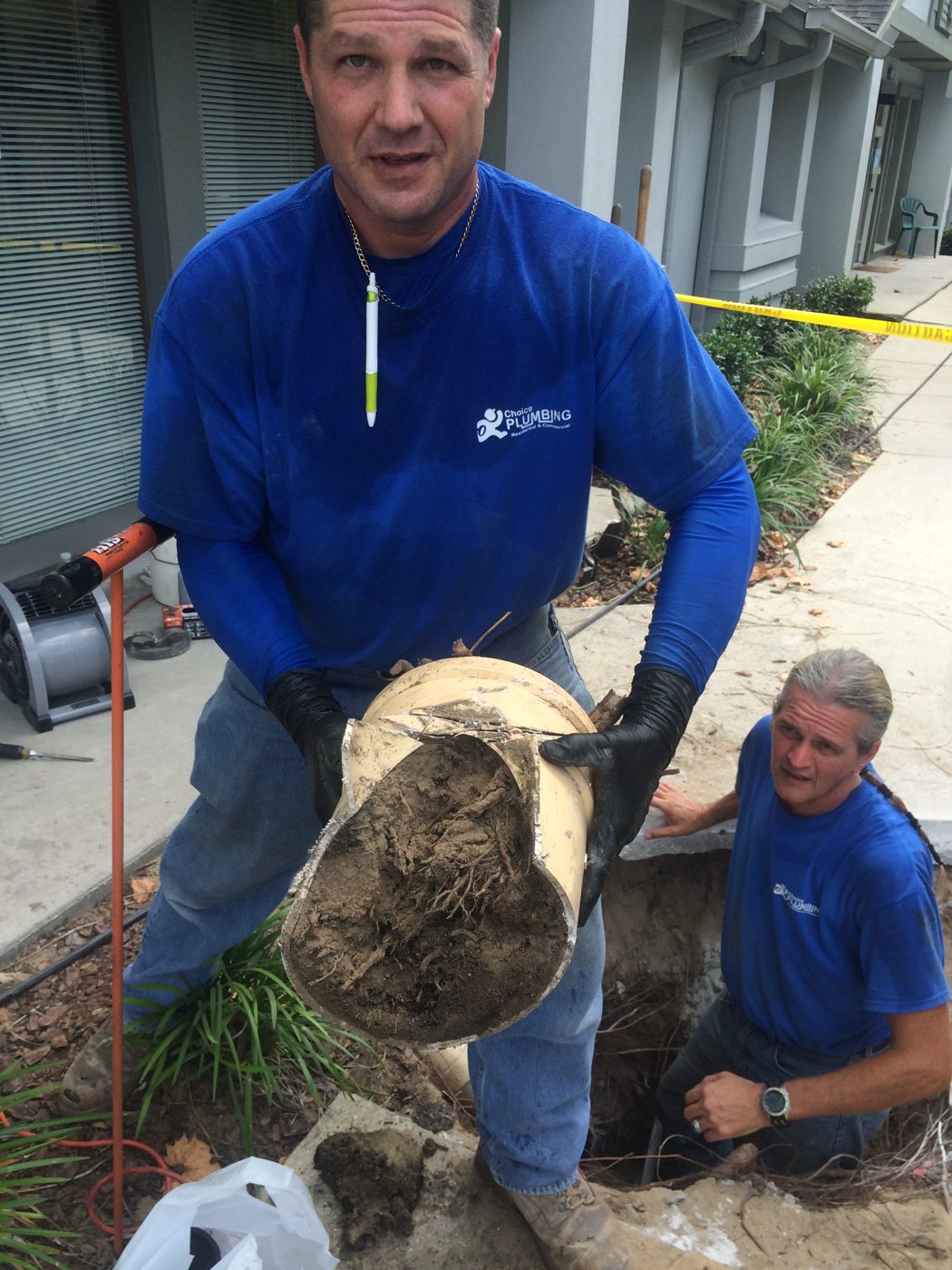
If you've discovered slow drains, recurring backups, or a sewer smell in an older Orlando home, the culprit is often something you can't see: tree roots that have worked their way into the sewer line. Root intrusion is one of the most common sewer problems we see across Central Florida, and older neighborhoods get hit the hardest. Here's why, what to watch for, and how we fix it.
Why Older Homes Are So Vulnerable
A few things stack up against older Orlando homes:
Cast iron and clay pipes. Homes built through the 1970s were typically plumbed with cast iron or vitrified clay sewer lines. Cast iron corrodes from the inside out over 40 to 60 years, leaving a rough, flaking interior that catches debris. Clay comes in short sections joined every few feet, and those joints loosen and crack as the ground shifts. Both create exactly the kind of small openings roots are looking for.
Mature trees. The shade and curb appeal of an established Orlando neighborhood comes from big, old oaks and other thirsty species. Their root systems can spread far wider than the canopy above — easily reaching a sewer line running across the yard.
Our climate and soil. Central Florida's warm, wet weather keeps roots growing year-round, and our sandy soil shifts and drains in ways that stress aging pipe joints. A line that might last longer up north ages faster here.
How Root Intrusion Actually Happens
Roots don't smash through solid, healthy pipe. They're drawn to moisture and nutrients, so when a sewer line develops even a hairline crack or a slightly separated joint, the small amount of vapor and water escaping acts like a beacon. A thin root finds the opening, slips inside, and then thrives on the constant supply of water and waste. Over time that single thread becomes a dense mat that narrows the pipe, snags toilet paper and grease, and eventually blocks flow entirely.
Because it all happens underground, most homeowners don't know anything is wrong until the symptoms become impossible to ignore.
Warning Signs to Watch For
Catching root intrusion early is the difference between a routine cleaning and a major excavation. Watch for:
- Several slow drains at once. One slow sink is usually a local clog. When tubs, sinks, and toilets all drain sluggishly, the restriction is likely in the main line.
- Gurgling toilets or drains. Roots partially blocking the line force air backward through the system, creating gurgling or bubbling — often after you flush or run the washer.
- Sewer odor inside the home or out in the yard, which signals waste is escaping or backing up.
- Recurring backups. If the same clog keeps returning a few weeks after it's cleared, roots are usually the reason.
- Soggy or unusually green patches in the lawn along the path of the sewer line, where leaking water and nutrients feed the grass above.
If you're seeing any of these, it's worth getting the line looked at before it backs up into the house.
How We Diagnose It
Guessing wastes money, so we start by looking. A high-definition sewer camera inspection sends a waterproof camera right into the line so we — and you — can see exactly what's going on: where the roots are entering, how bad the intrusion is, and the condition of the surrounding pipe. We can pinpoint the location within inches, so any repair is targeted rather than exploratory.
Your Repair Options
What we recommend depends on what the camera shows:
Root cutting and hydro jetting. For lines that are still structurally sound, hydro jetting blasts the roots out and scours the pipe wall back to near its original diameter. This restores flow, but if the cracks remain, roots will return — so it's often paired with a longer-term fix.
Spot repair. When the damage is confined to one section, we can dig and replace just that length of pipe.
Cast iron descaling. If your cast iron line is scaled up and narrowed but not cracked, we mechanically remove the rust and buildup from the inside, restoring the pipe back toward its original diameter — no replacement needed.
Full replacement. When cast iron or clay has reached the end of its life across the whole run, replacing the line is the most cost-effective long-term solution. Many homeowners pair this with whole-house repiping if the supply lines are equally aged. See all of our sewer line repair options for the full picture.
How to Prevent It Coming Back
- Have the line camera-inspected periodically, especially if your home is 40+ years old.
- Be mindful of what goes down the drain — grease and "flushable" wipes give roots something to grab.
- Consider full replacement of aging cast iron and clay rather than repeatedly clearing the same blockage.
- When planting near the sewer line's path, choose species with less aggressive root systems.
Living in an Older Orlando Neighborhood? Get Ahead of It.
Original-piping homes in areas like College Park, Winter Park, Colonialtown, and the older parts of Ocoee and Apopka are exactly where we see the most root intrusion. If you've noticed any of the warning signs above — or you just want peace of mind before it becomes an emergency — a camera inspection is the smartest first step.
Choice Plumbing has served Orlando and Central Florida since 2005. We're licensed (CFC1426822), BBB A+ accredited, and we guarantee a 1-hour arrival or your service call is free, with 0% financing available. Call (407) 422-7443 — answered 24/7 — or book a sewer line inspection online.