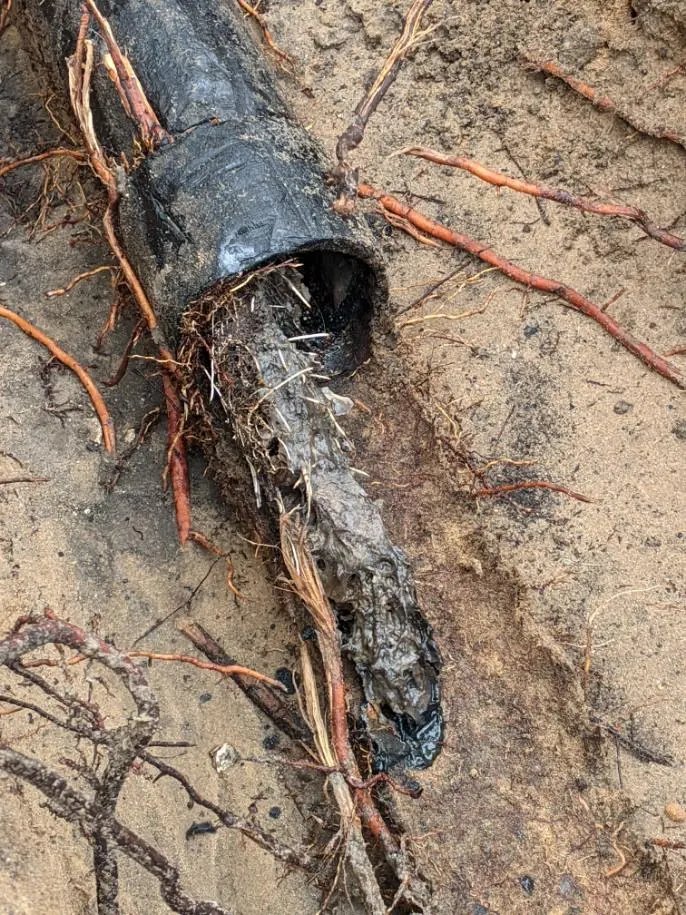
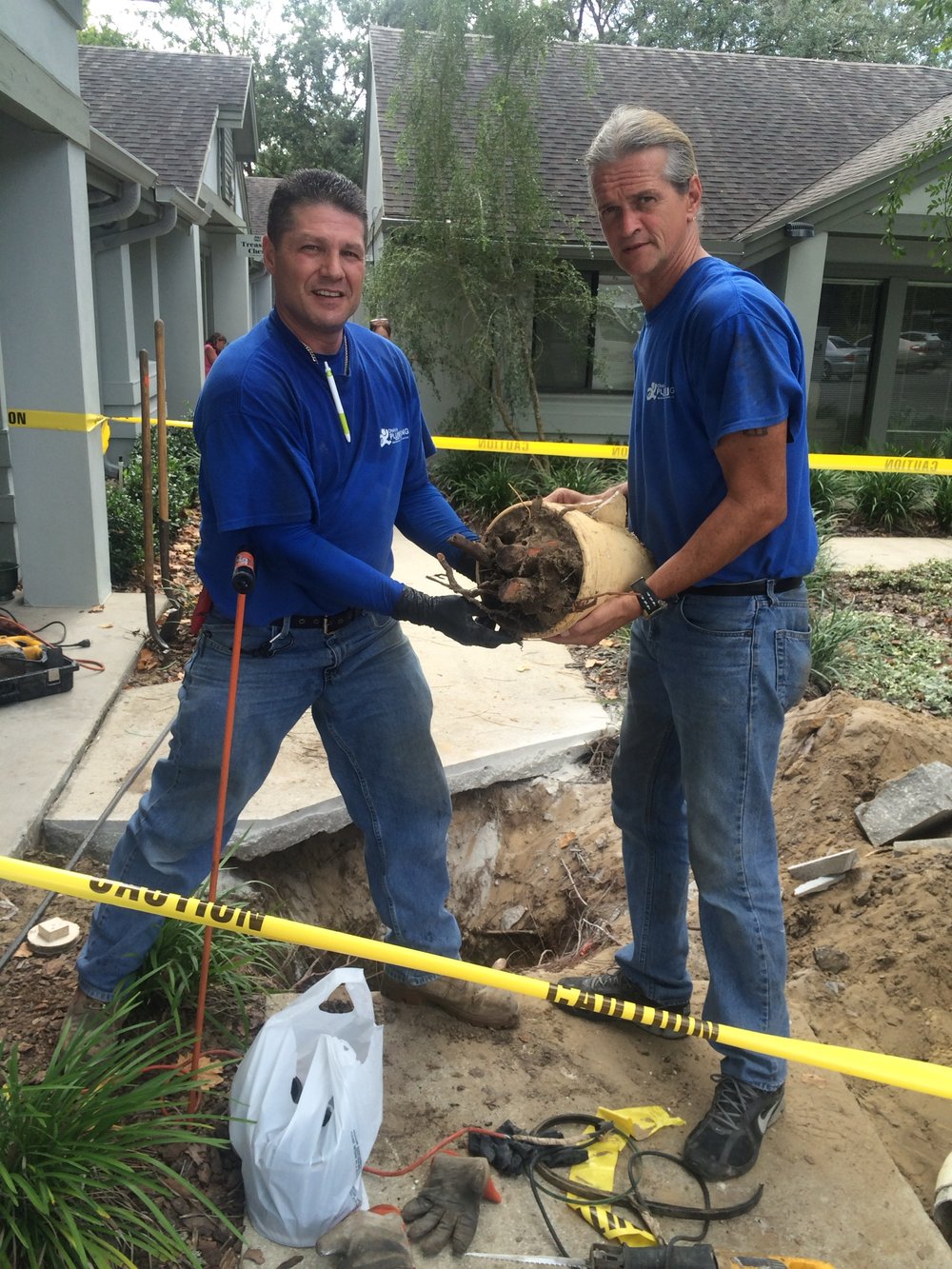
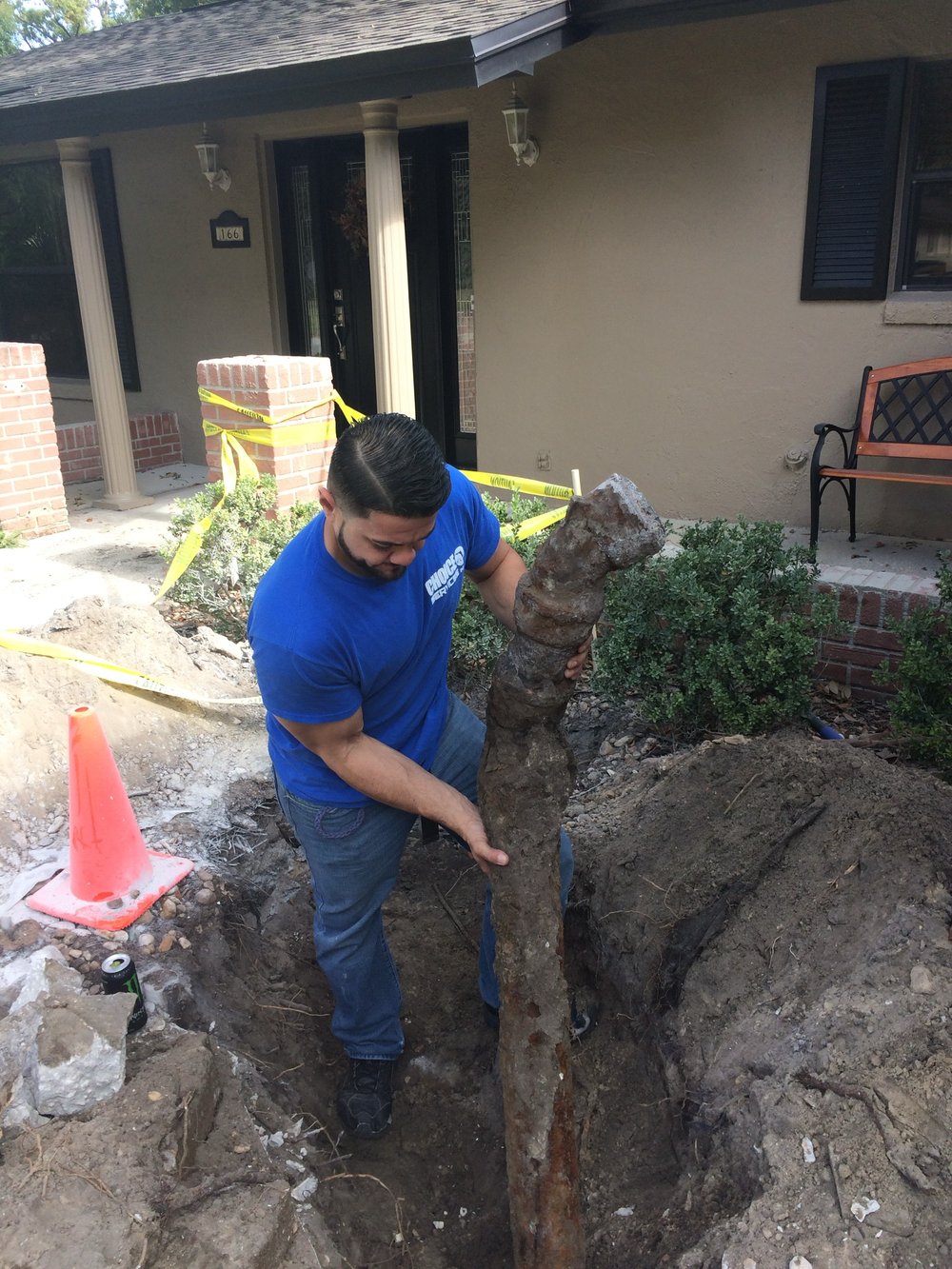
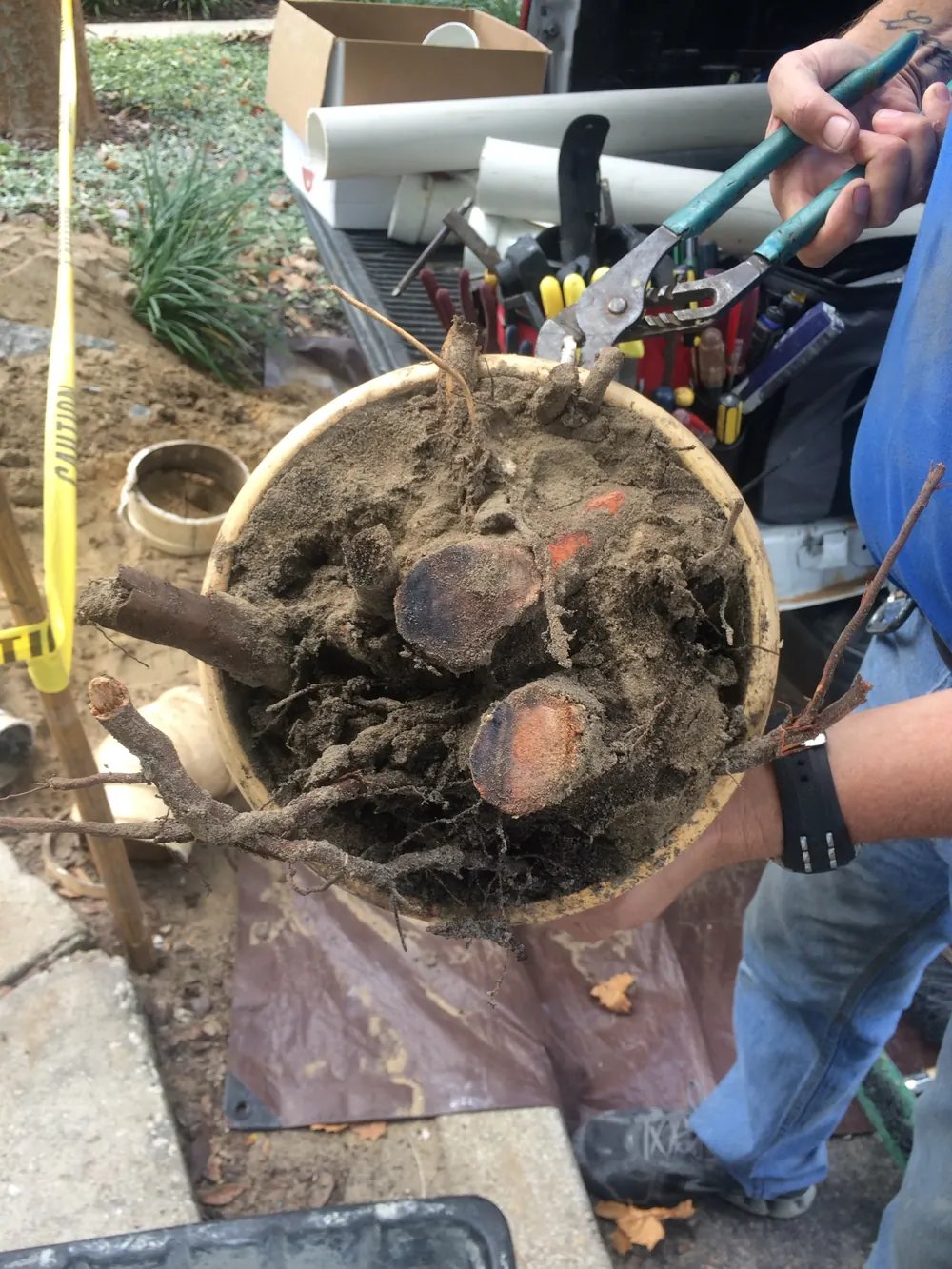
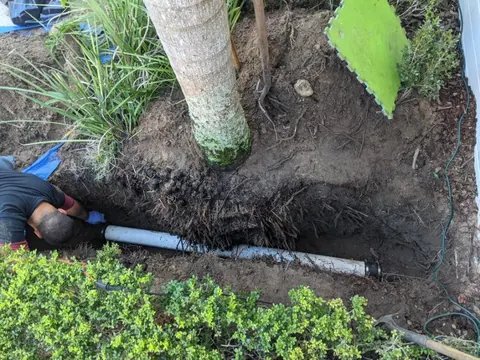
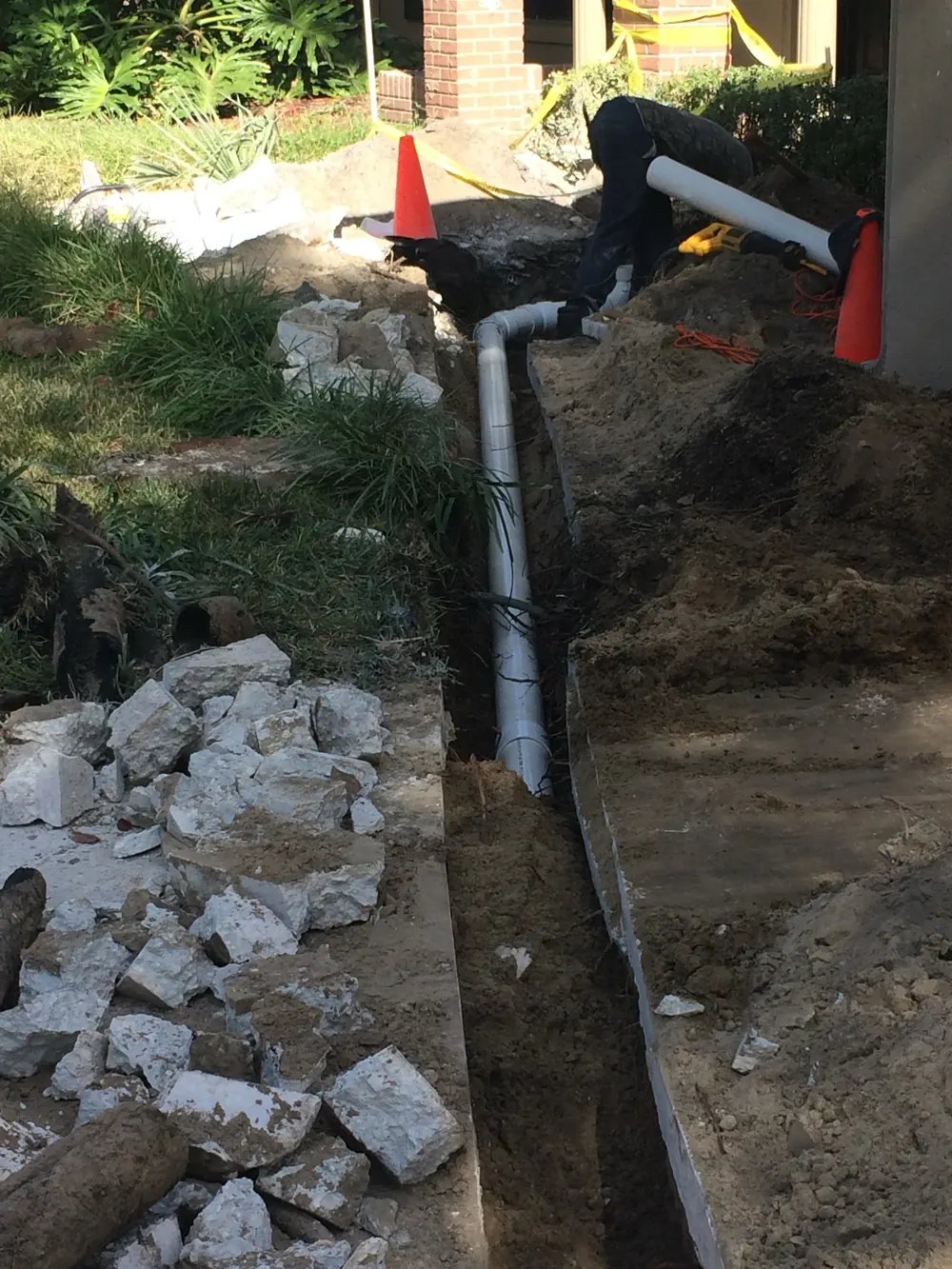
Roots in your line? A cracked cast iron or clay pipe? We find the problem with a camera first, then fix it the right way: root removal, cast iron descaling, a spot repair, or full replacement. No guessing, and no tearing up your whole yard.
Pick a day — we confirm by phone within minutes
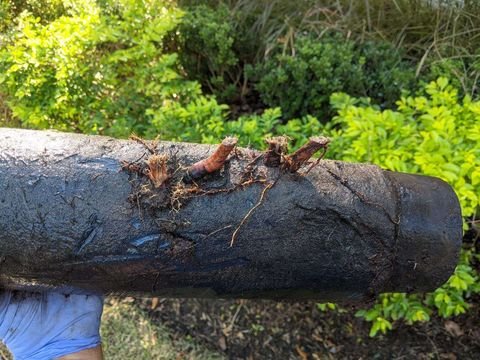
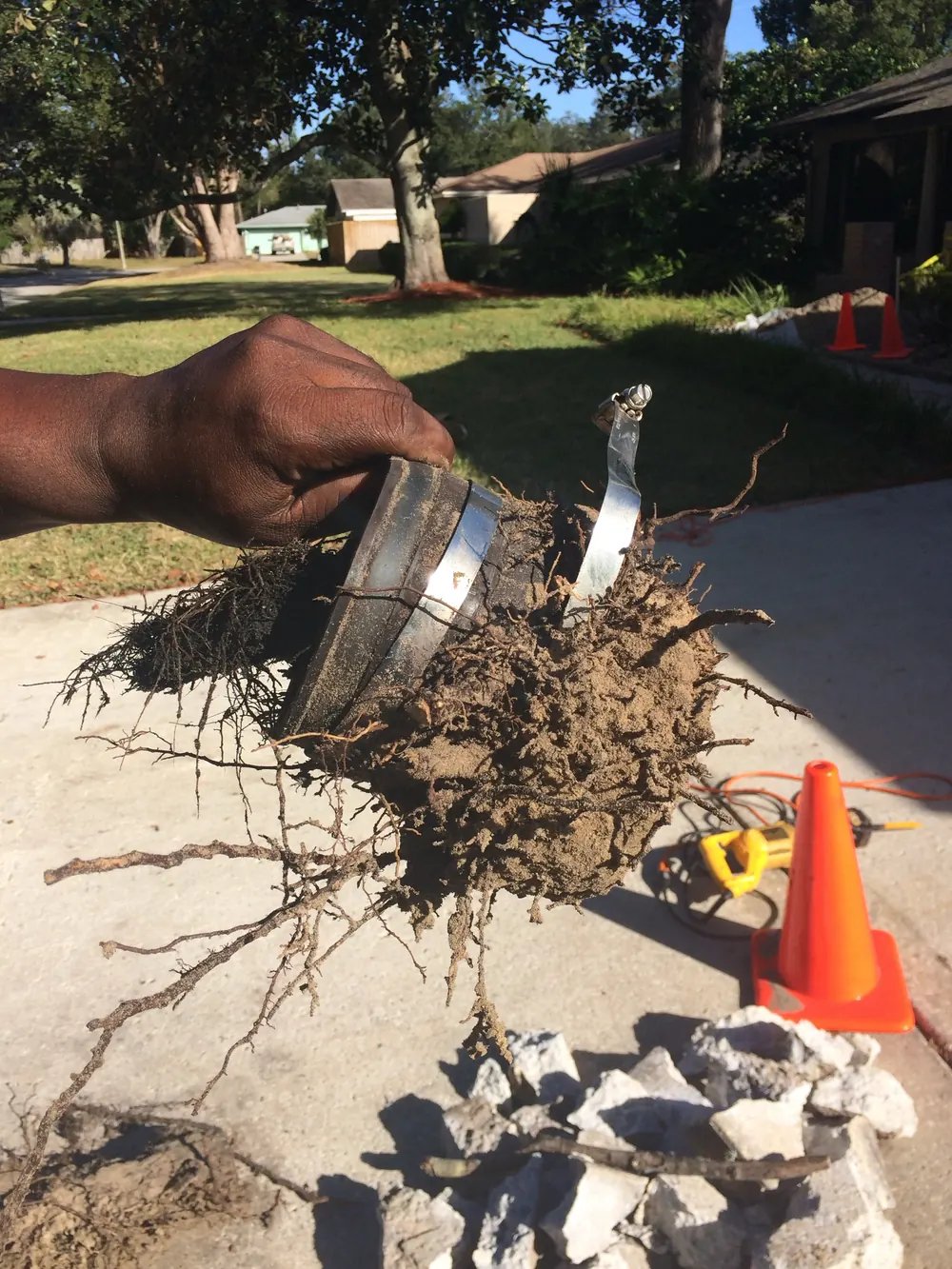
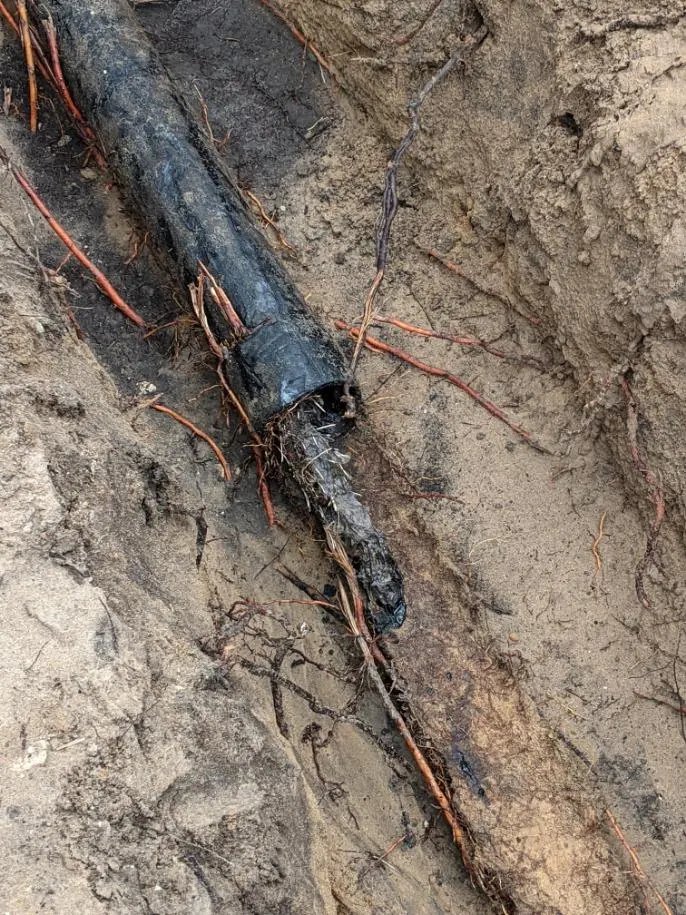
Homes built before the 1980s usually still run on the original cast iron or clay sewer line. Cast iron corrodes and scales up from the inside. Clay joints loosen and crack as Central Florida's sandy soil shifts. Either way, small openings form, and roots from nearby oaks and other thirsty trees follow the moisture right in. Once inside, they keep growing, trap waste, and cause the same backup over and over.

Sewer problems happen underground, so most homeowners don't know anything is wrong until the symptoms show up inside. Catching them early is the difference between a cleaning and a major repair.
When sinks, tubs and toilets all drain slowly, the problem is in the main line, not one fixture.
A partly blocked line pushes air back through the system, often after you flush or run the washer.
A sewer smell inside the house or in the yard means waste is escaping or backing up.
If a backup returns a few weeks after it's cleared, roots or a broken pipe are usually the cause.
Wet or unusually green strips along the sewer line's path mean the pipe is leaking underground.
Original cast iron and clay lines are now decades past their prime and prone to cracking and roots.
What we recommend depends on what the camera shows. We walk you through the footage and the trade-offs so you make the call with real information, not a sales pitch.
Cutting heads and high-pressure water clear out roots and scour the pipe wall clean. Best for lines that are still structurally sound.
How hydro jetting works →Specialized cutters remove the heavy scale and rust built up inside old cast iron, restoring the pipe's full diameter so waste flows freely again.
When the damage is limited to one spot, we dig only at that location and replace just the broken length of pipe with new PVC.
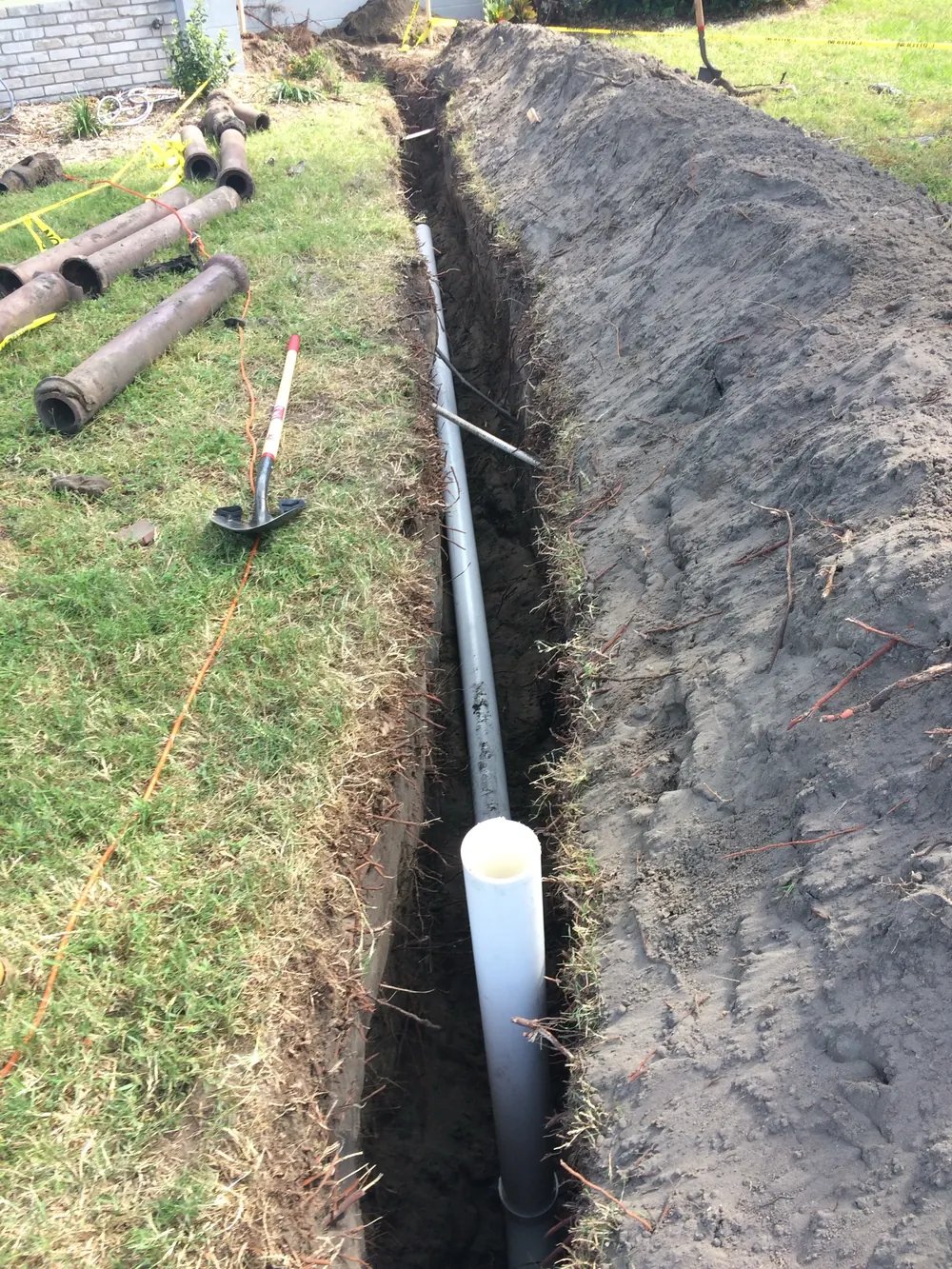
When cast iron or clay has failed along the whole run, replacing the line with new PVC is the most cost-effective solution. Pairs well with a whole-house repipe for fully aged homes.
About whole-house repiping →We run an HD camera through the line and locate the roots or damage within inches. You watch the screen with us.
Hydro jetting cuts out roots and debris and restores flow right away.
We show you the footage and explain your options and costs. No pressure, no guessing.
We complete the work, then camera the line again so you can see it's done right.
Want to see the line first? Start with a sewer camera inspection.
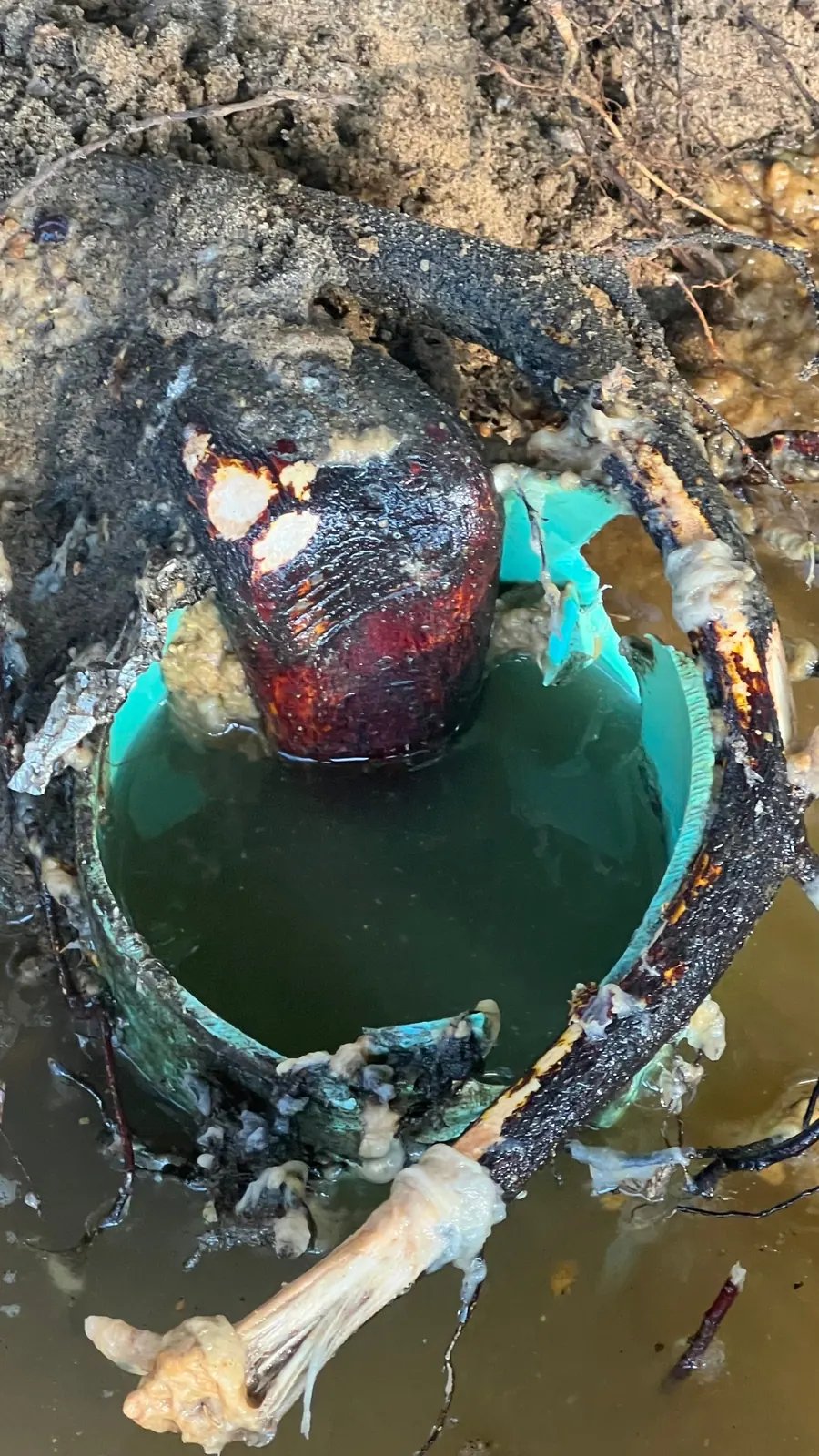
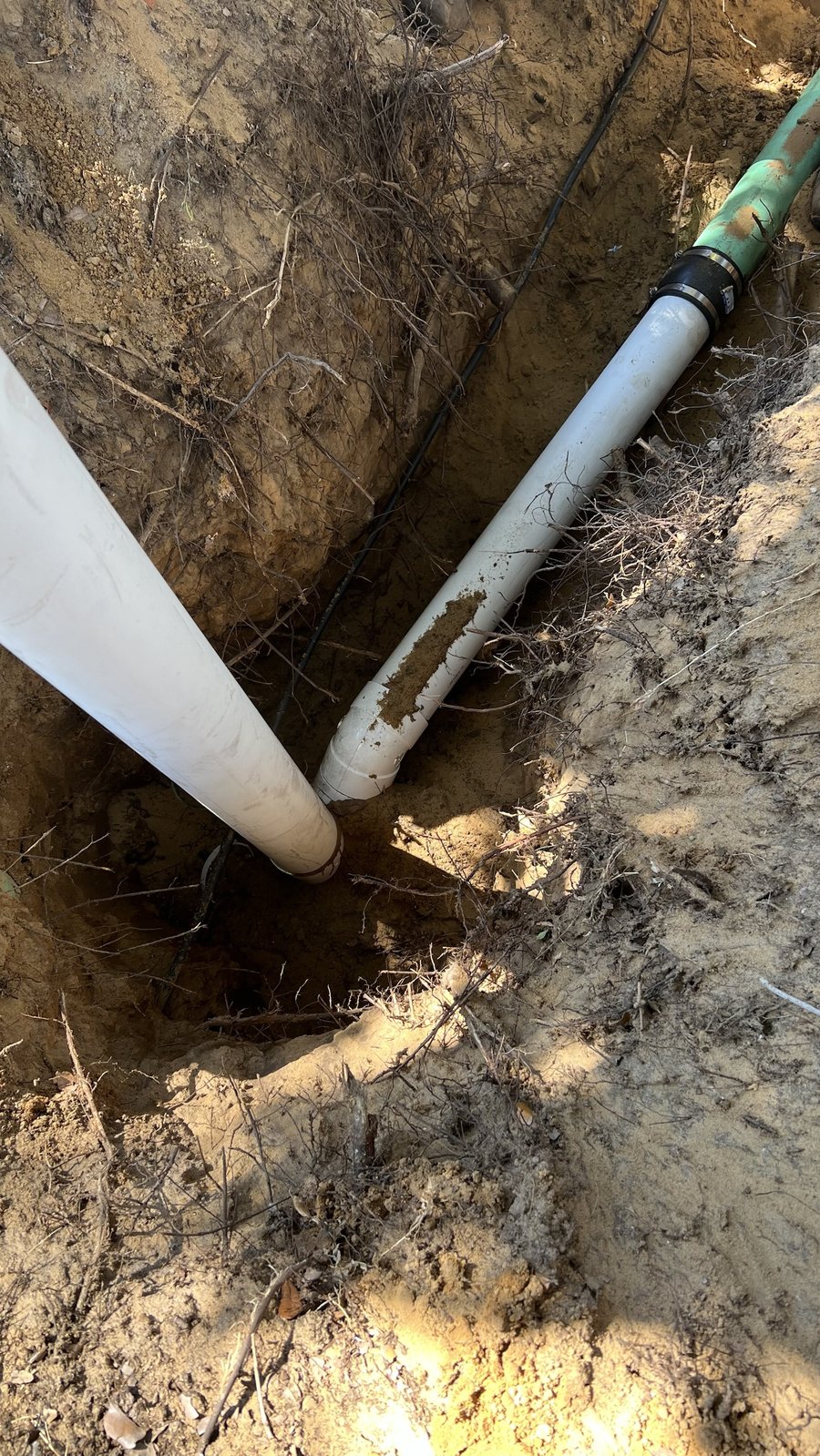
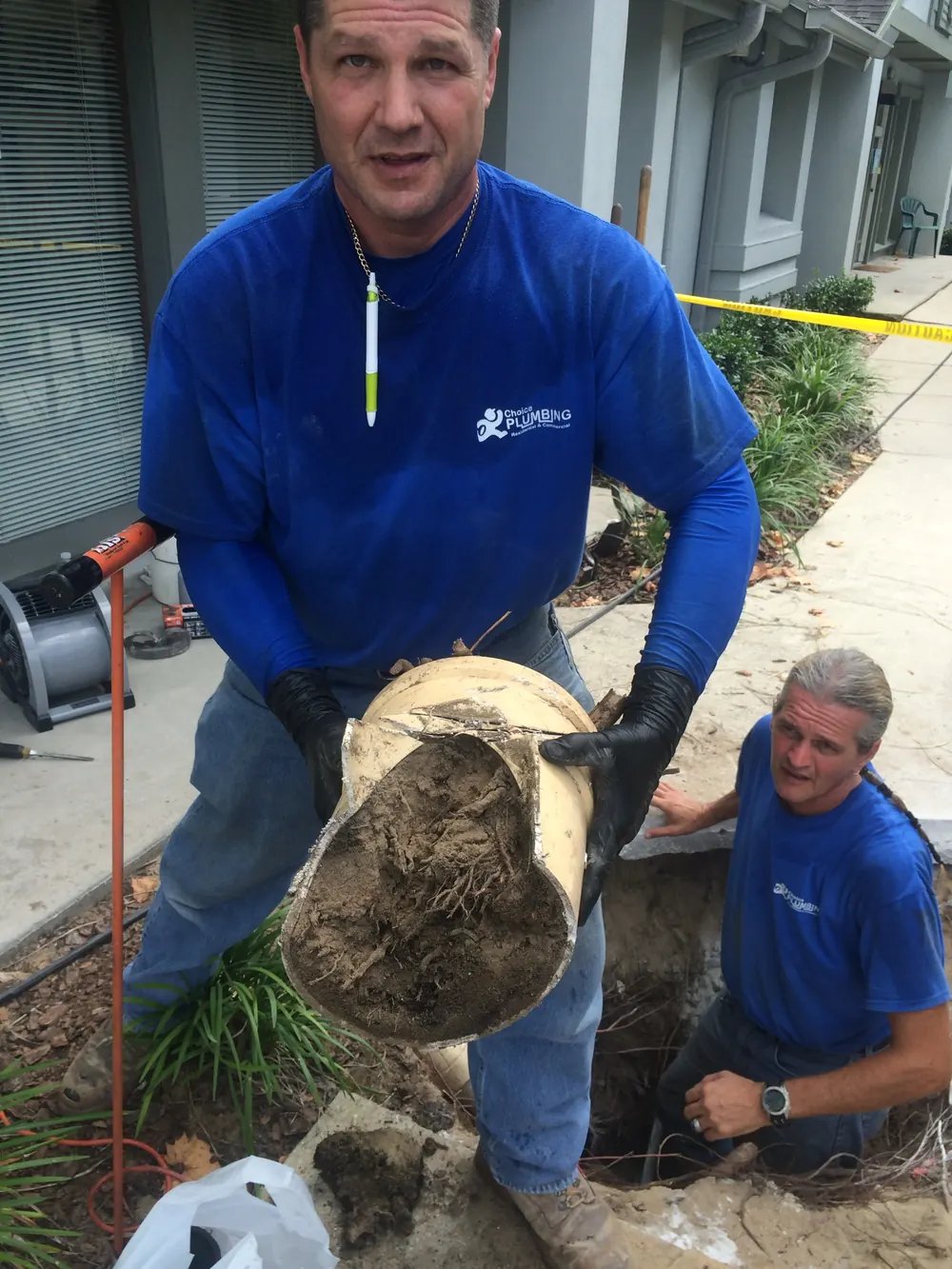
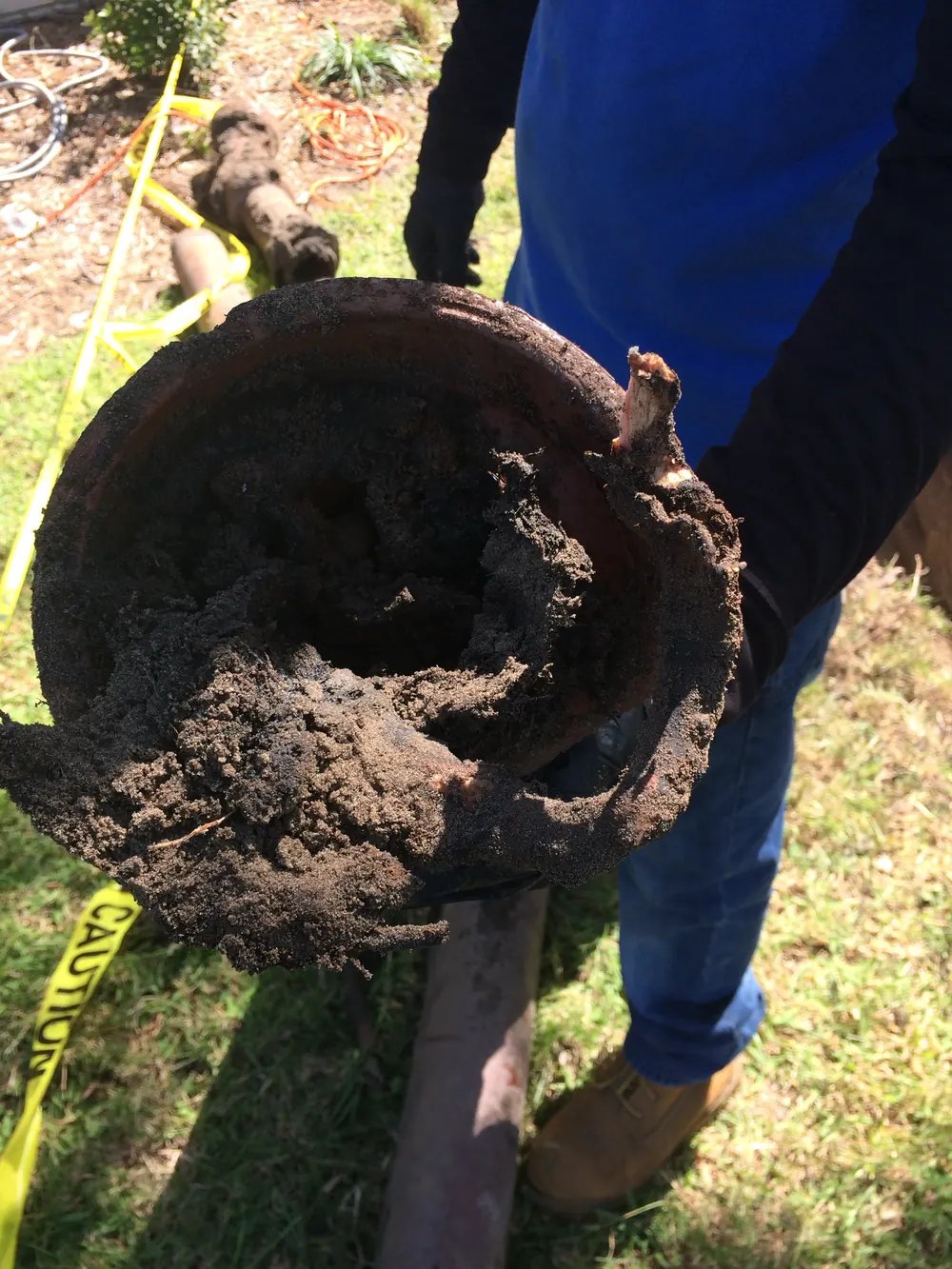
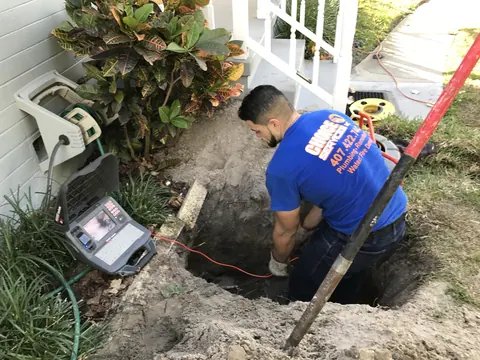
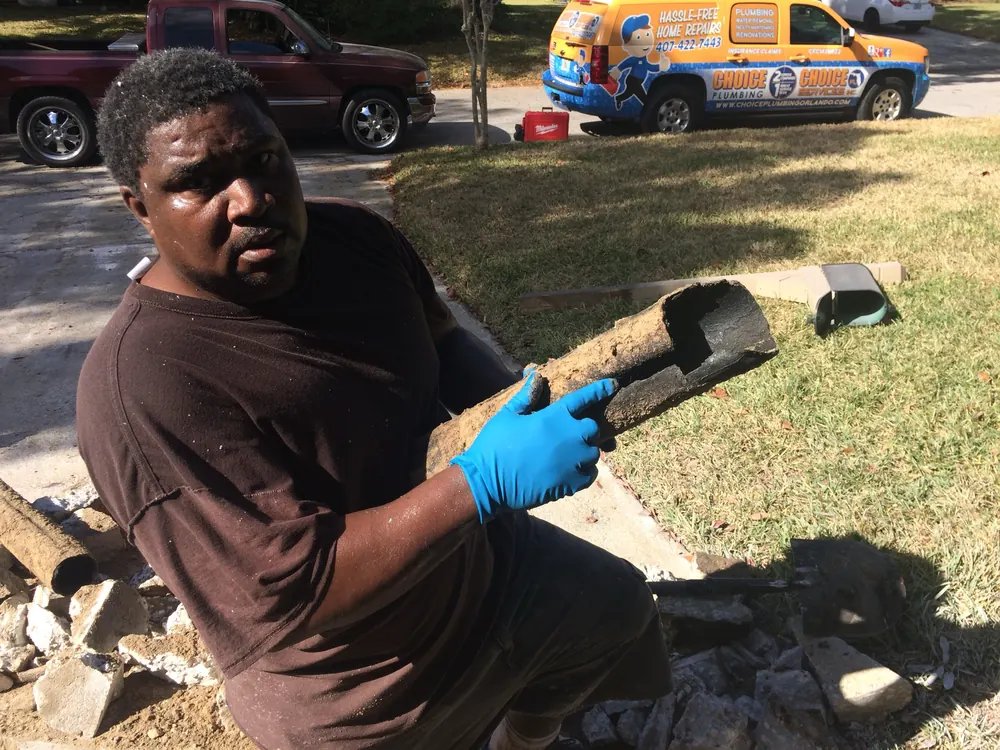
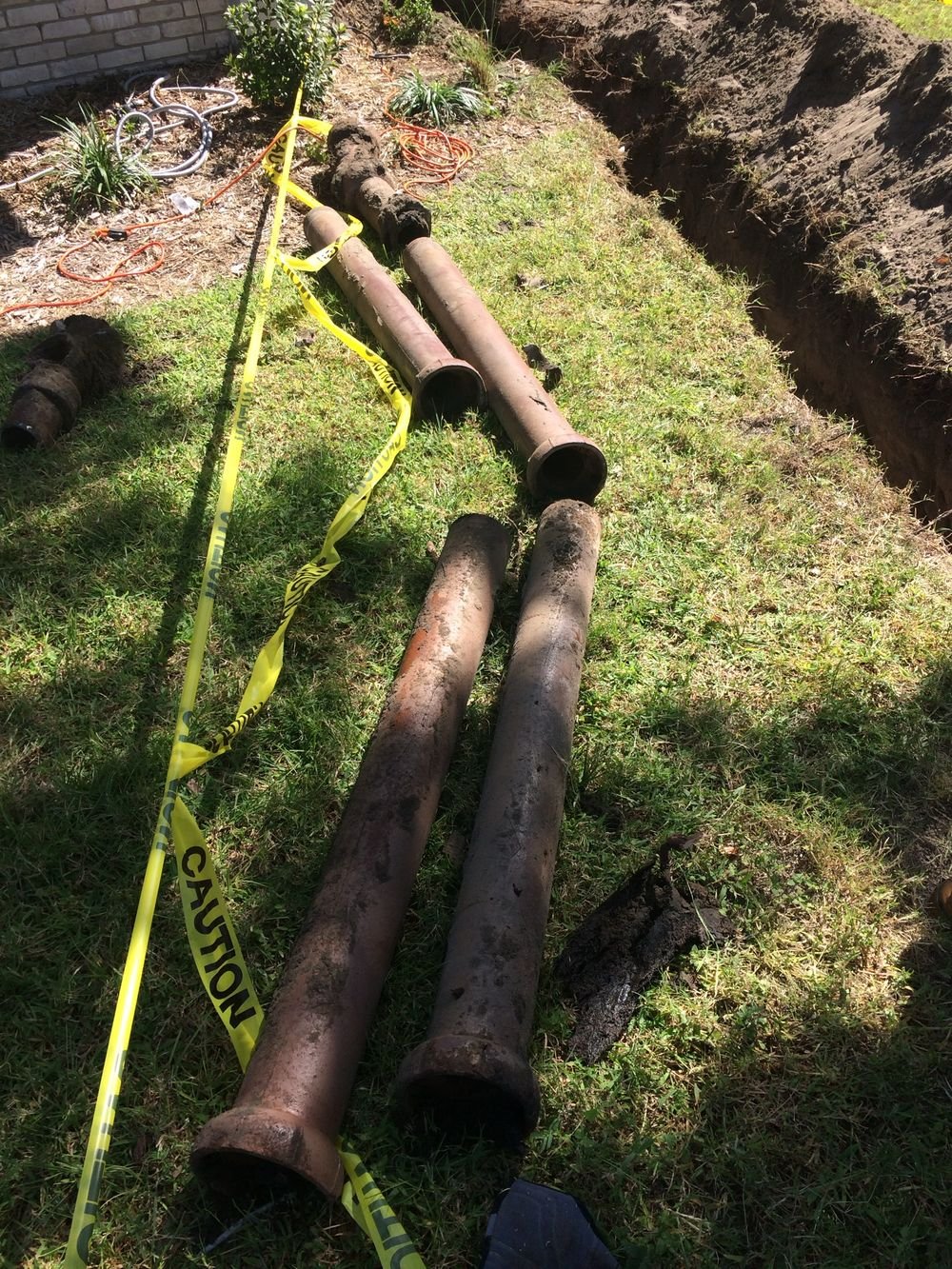
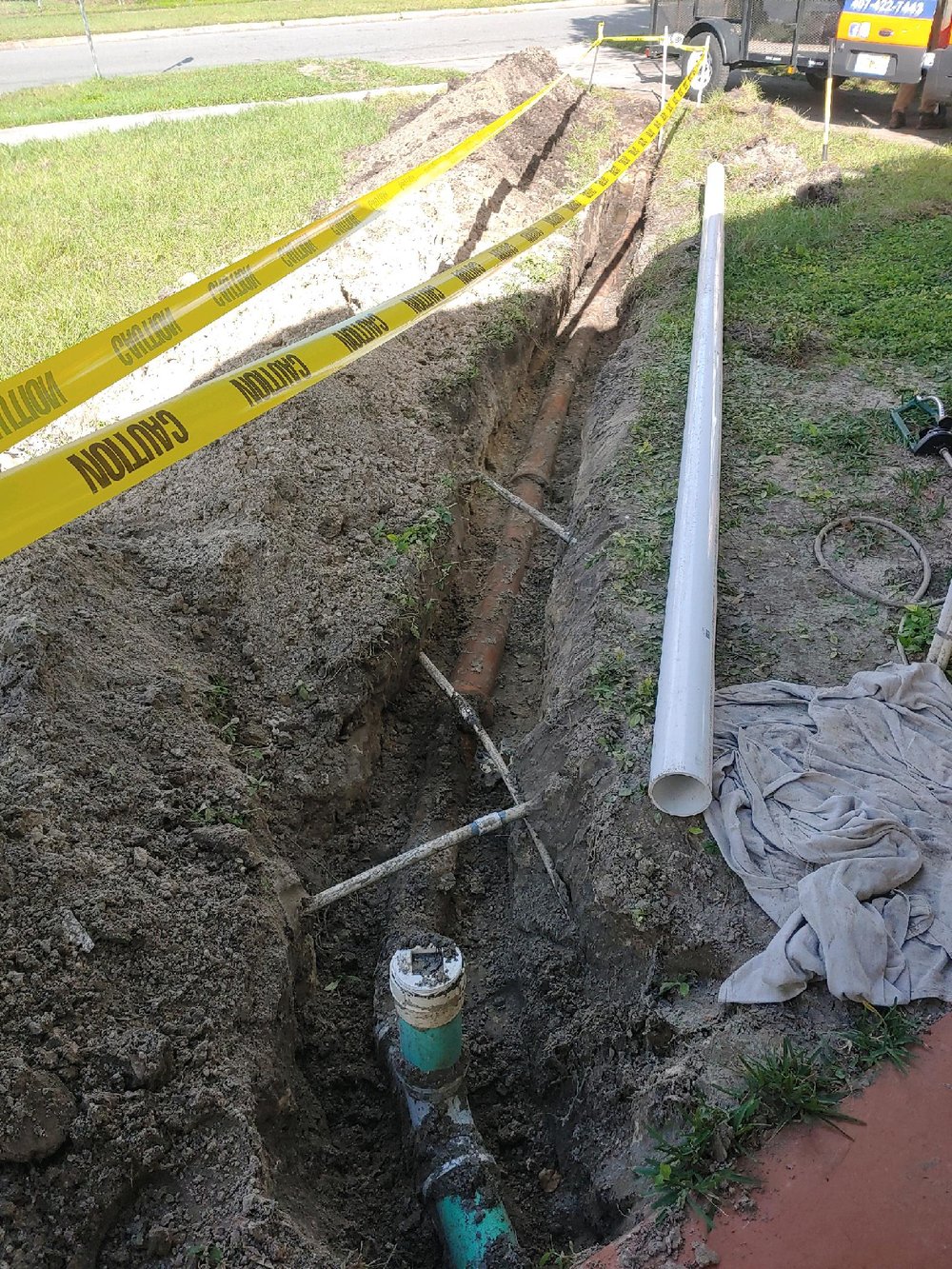
Real photos from our Central Florida jobs, not stock images. Tap any photo to see it full size.
Roots, broken pipe and the repairs that fixed them. Tap any photo to enlarge.
Book a main drain cleaning and your camera inspection is included free — so you can see the line is truly clear with your own eyes. Just need a scope on a line that isn't clogged? Ask about our standalone inspection, starting at $300.
*Camera inspection available with accessible ground cleanout only. Cannot be combined with other offers. Offer subject to change without notice.
Drain backing up right now?
🚨 1-Hour Arrival Guaranteed — or Your Service Call is FREESame-day appointments available. Licensed plumbers, cameras and jetting equipment ready now across all of Central Florida.
Fill out the form and we'll call you back within minutes.
From Orlando to Clermont, Winter Garden to Kissimmee — our licensed sewer repair team covers all of Central Florida with the same 1-hour arrival guarantee.
Address: 3550 Old Winter Garden Rd, Orlando, FL 32805
Phone: (407) 422-7443
Text: (689) 236-0255
Office Hours: Mon–Fri 7:30 AM – 5:00 PM
Emergency Line: 24/7 live answer — never voicemail
License: CFC1426822
Orlando · Winter Garden · Windermere · Dr. Phillips · Bay Hill · Horizon West · Lake Nona · Ocoee · Winter Park · Clermont · Celebration · Davenport · MetroWest · Hunter's Creek · Four Corners
How roots find their way into cast iron and clay sewer lines, the warning signs to watch for, and how to keep them from coming back.